Why spring is the critical season
As snow melts and spring storms arrive, saturated soil sends more groundwater toward foundations. The sump pump may sit quietly for months and then be expected to run repeatedly with little warning.
Inspect the pit and pump
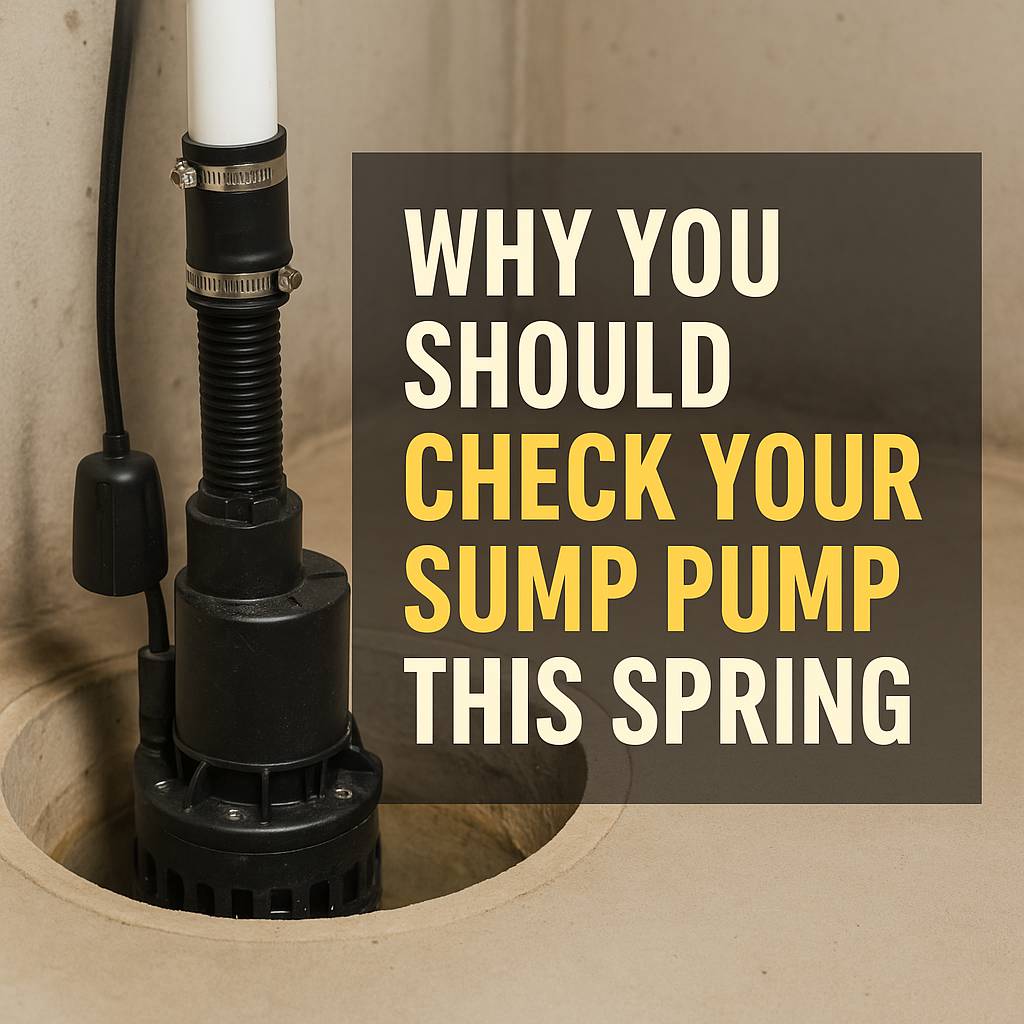
- Remove loose debris that could interfere with the float.
- Make sure the pump sits upright and appears secure.
- Look for damaged cords, corrosion, or unusual movement.
- Confirm the float has room to move freely.
Do not reach into a wet pit while the pump is energized.
Perform a controlled test
If it can be done safely, slowly add clean water until the float rises. The pump should start, lower the water level, and shut off normally. Listen for grinding, rattling, repeated cycling, or a motor that runs without moving water.
Follow the discharge line
Check the visible line for leaks, frozen sections, loose fittings, and blockages. Outside, confirm the outlet is clear and sends water far enough away that it will not flow directly back toward the foundation.
Plan for a power outage
Many of the storms that create groundwater also interrupt electricity. A tested battery-backup pump, high-water alarm, and maintained battery provide another layer of protection.
A backup is only useful when the battery and alarm are tested regularly.
When to call
Call if the pump will not start, runs continuously, cycles rapidly, makes unusual noises, cannot keep up, or is approaching the end of its expected service life. A professional assessment before the next storm is much easier than recovery after a flood.
LOCAL HELP WHEN YOU NEED IT
Not sure what your home is telling you?
Describe the issue and Russell Services will help you determine the right next step. For active leaks, no heat, or a problem getting worse quickly, call directly.