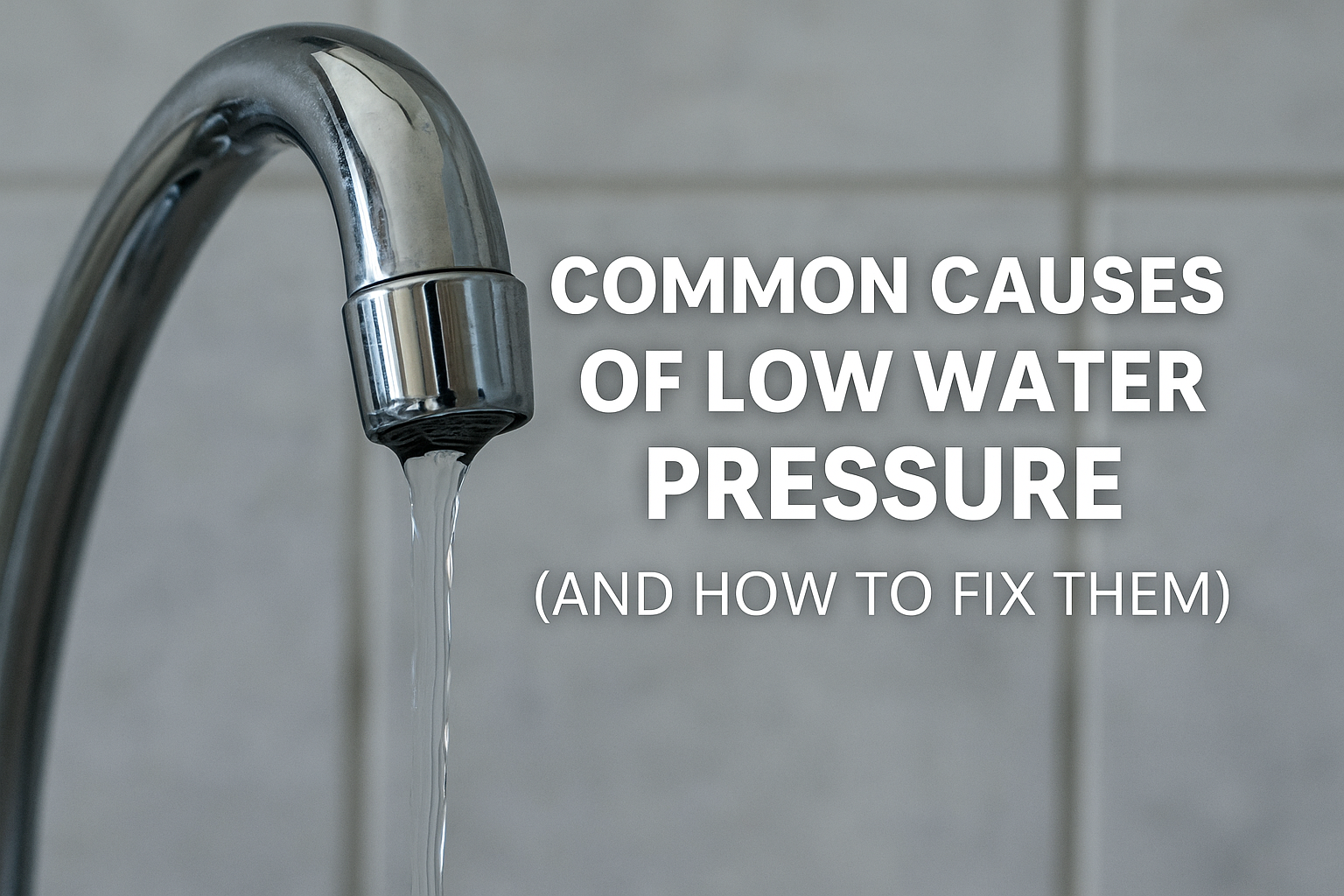
First, identify where pressure is low
- One faucet only: inspect the aerator or fixture.
- Hot water only: consider the water heater or hot-water piping.
- Several fixtures: look for a valve, regulator, leak, or pipe restriction.
- The entire neighborhood: check with the water utility or nearby homes.
Clogged aerators and showerheads
Mineral deposits and debris commonly restrict individual fixtures. Remove and clean an aerator according to the fixture instructions. If pressure remains poor at that location, the cartridge or local piping may need attention.
Partially closed or failing valves
A main valve or fixture shutoff that is not fully open can limit flow. Old gate valves can also fail internally even when the handle moves.
Never force an old or corroded valve. A broken main valve can turn a simple inspection into an active leak.
Leaks or restricted piping
Water escaping before it reaches a fixture reduces pressure. Corrosion and mineral buildup can also narrow older galvanized or hard-water-affected piping. Water stains, dampness, meter movement, or declining pressure throughout the house call for further diagnosis.
Pressure regulator, well, or municipal issues
A failing pressure-reducing valve can cause low, high, or fluctuating pressure. Well homes may have pressure-switch, tank, pump, or filtration problems. Municipal work and peak demand can temporarily affect an entire area.
When professional testing helps
A plumber can compare static and flowing pressure, isolate the affected branch, inspect valves and regulators, and check for leakage or restriction. The right repair depends on the pattern—not merely the feeling of weak flow.
LOCAL HELP WHEN YOU NEED IT
Not sure what your home is telling you?
Describe the issue and Russell Services will help you determine the right next step. For active leaks, no heat, or a problem getting worse quickly, call directly.